
Products · Cameras & video telematics
No ordinary dash cam.
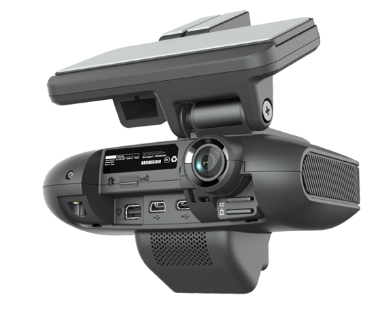
Sensium Vision is fully connected video telematics with on-camera AI processing — providing the real-time visibility you need for driver risk management. Monitors the road ahead AND the driver. AI flags potential safety issues. Footage feeds back to the fleet manager for assessment.
30 minutes, scoped to video telematics on your fleet.

On-camera AI, not cloud-batch
Sensium Vision processes video on the device itself, in real time. Harsh cornering, distracted driving, aggressive behaviour, fatigue — all detected as they happen, not 24 hours later in a batch process. Low-latency alerts mean fleet managers can take corrective action while it still matters.
Why AI-powered video telematics matters
Three operational outcomes.
AI video telematics
See the behaviour as it happens. Not 24 hours later.
Real-time safety monitoring
See behaviour as it happens.
Dual-facing cameras (forward and in-cabin) provide real-time visibility into driver behaviour. On-camera AI flags risky patterns - harsh cornering, distracted driving, tailgating, fatigue - so you can act on them while they're happening, not after the incident. Better drivers, fewer accidents, lower insurance exposure.
What the AI detects
- Harsh cornering and braking
- Distracted driving
- Driver fatigue signals
- Stop sign violations
- Aggressive lane changes
- Tailgating
Incident workflow
Video automatically uploaded to Sensium Connect. Linked to TRACKbox telemetry (location, speed, driver ID). Available instantly for insurance claims, investigations, training feedback, or driver coaching. No SD card retrieval required.
Video proof at your fingertips
Indisputable evidence when it counts.
When a vehicle is involved in an incident, the video footage shows exactly what happened — reducing your liability. You don't worry about Micro SD cards going missing after an incident because the data is already beamed back to the management console. The footage is searchable, time-coded, and linked to the corresponding TRACKbox telemetry.
Six-camera array option (AI265)
All-round vision for heavy industry.
The AI265 model expands to a 6-camera array — perfect for heavy-industry fleets and large vehicles where blind spots are a real safety hazard. All angles captured, all incidents documented accurately, no blind spots. Improves driver accountability and reduces both physical risk and insurance cost on operations involving trucks, plant, or large equipment.
Six-camera coverage
Forward + cabin (standard) plus 4 additional configurable cameras. Cover sides, rear, reversing, hitch view, cargo bay — whatever your specific vehicle type and risk profile requires. All footage streams back to one Sensium Connect account.
The two camera models
AI245 and AI265.
Engineered to the highest standards and fully integrated with Sensium Connect. Choose the AI245 for standard dual-facing coverage, or the AI265 for expandable 6-camera arrays on your heavy or high-risk vehicles.
AI245
Standard dual-facing
- Dual forward & in-cabin Full HD camera, 142° FOV
- Built-in 4G LTE Cat.6 & dual-band WiFi
- Bluetooth 4.2 BLE, NFC/HF RFID
- Qualcomm Octa-core, Android 9
- Single Micro SD slot (up to 512GB)
- GPS, GLONASS, Galileo, QZSS
- 6-axis Accelerometer & Gyro
- Battery discharge prevention
AI265
Expandable 6-camera array
- Dual forward & in-cabin Full HD camera, 142° FOV
- Extends to additional 4 camera inputs (6-camera array)
- Built-in 4G LTE Cat.4 & dual-band WiFi
- Bluetooth 5.0 BLE, NFC/HF RFID
- Qualcomm Octa-core, Android 10 (non-GMS)
- Dual Micro SD slots (up to 512GB / slot)
- GPS, GLONASS, Galileo, QZSS (ADR optional)
- 6-axis Accelerometer & Gyro
- Battery discharge prevention
Not sure which model fits your vehicle mix? We'll map it in one call.
Talk to a specialistSee the cameras against your fleet's risk profile - 30 minutes.
Frequently asked
Cameras & video telematics questions.
Question 01
What does the AI in Sensium Vision actually do?
Question 01
What does the AI in Sensium Vision actually do?
On-camera AI processes video footage in real time to detect potential safety issues — harsh cornering, distracted driving, aggressive behaviour, fatigue. Detection happens on the device (not in the cloud) for low-latency alerts. Flagged events are uploaded to Sensium Connect with the relevant video clip for fleet manager review.
Question 02
What are the camera options?
Question 02
What are the camera options?
Two models. The AI245 is the standard dual-facing dash cam (road + cabin). The AI265 expands to a 6-camera array (road + cabin + 4 additional inputs), purpose-built for heavy industry and fleet managers who need all-round vision around larger vehicles.
Question 03
Where is video footage stored?
Question 03
Where is video footage stored?
Locally on the device (Micro SD) and beamed back to the Sensium Connect management console. You never have to worry about missing SD cards after an incident — the data is already in the cloud and accessible from the dashboard. Storage retention can be configured per fleet.
Question 04
Can I set alerts on specific events?
Question 04
Can I set alerts on specific events?
Yes. You can be notified when an incident occurs — stop sign violations, distracted driving, tailgating, harsh braking, and more. Either as a real-time alert or batched into a daily / weekly report depending on severity.
Question 05
Does the camera need TRACKbox to work?
Question 05
Does the camera need TRACKbox to work?
The cameras have their own cellular connectivity (4G LTE) and can operate independently. When paired with TRACKbox, video events can be correlated with telemetry data (route, speed, driver ID) for richer incident analysis and Chain of Responsibility evidence.
Question 06
Is Sensium Vision the same platform as Sensium Connect?
Question 06
Is Sensium Vision the same platform as Sensium Connect?
No. Sensium Vision is a separate, complementary video telematics platform that sits alongside Sensium Connect, rather than a video module inside it. Integration between the two is in development. For now, video footage and telematics are managed as two complementary systems that can be cross-referenced during incident review.
Question 07
What is the difference between the AI245 and AI265 cameras?
Question 07
What is the difference between the AI245 and AI265 cameras?
The AI245 is the standard dual-facing dash cam, covering the road ahead and the driver in cabin. The AI265 expands to a six-camera array (road plus cabin plus four additional inputs) for heavy industry and larger vehicles where blind spots are a real hazard. Both run on-camera AI.
Question 08
How does the camera connect to the network?
Question 08
How does the camera connect to the network?
Both camera models have built-in 4G LTE and dual-band WiFi, so they operate on their own connection without relying on the vehicle telematics device. The AI245 uses 4G LTE Cat.6 and the AI265 uses 4G LTE Cat.4, alongside GPS, GLONASS, Galileo and QZSS positioning.
Question 09
How much footage can the camera store on-device?
Question 09
How much footage can the camera store on-device?
The AI245 has a single Micro SD slot supporting cards up to 512GB. The AI265 has dual Micro SD slots, each supporting up to 512GB. Footage is held locally on the card and flagged AI events are uploaded for review, so you are not reliant on retrieving an SD card after an incident.
Question 10
Does Sensium Vision help with insurance and incident claims?
Question 10
Does Sensium Vision help with insurance and incident claims?
Yes. When a vehicle is involved in an incident, the footage shows exactly what happened, which helps reduce liability and supports insurance claims. Flagged events are time-coded and, when the camera is paired with TRACKbox, can be cross-referenced with telemetry such as location, speed and driver ID.
Talk to Sensium
See Sensium Vision in your vehicles.
A 30-minute walkthrough on your fleet mix, risk profile, and incident exposure. We'll scope what camera coverage and alert rules would deploy across your operation.