
Why Sensium
Locally built and owned end-to-end.
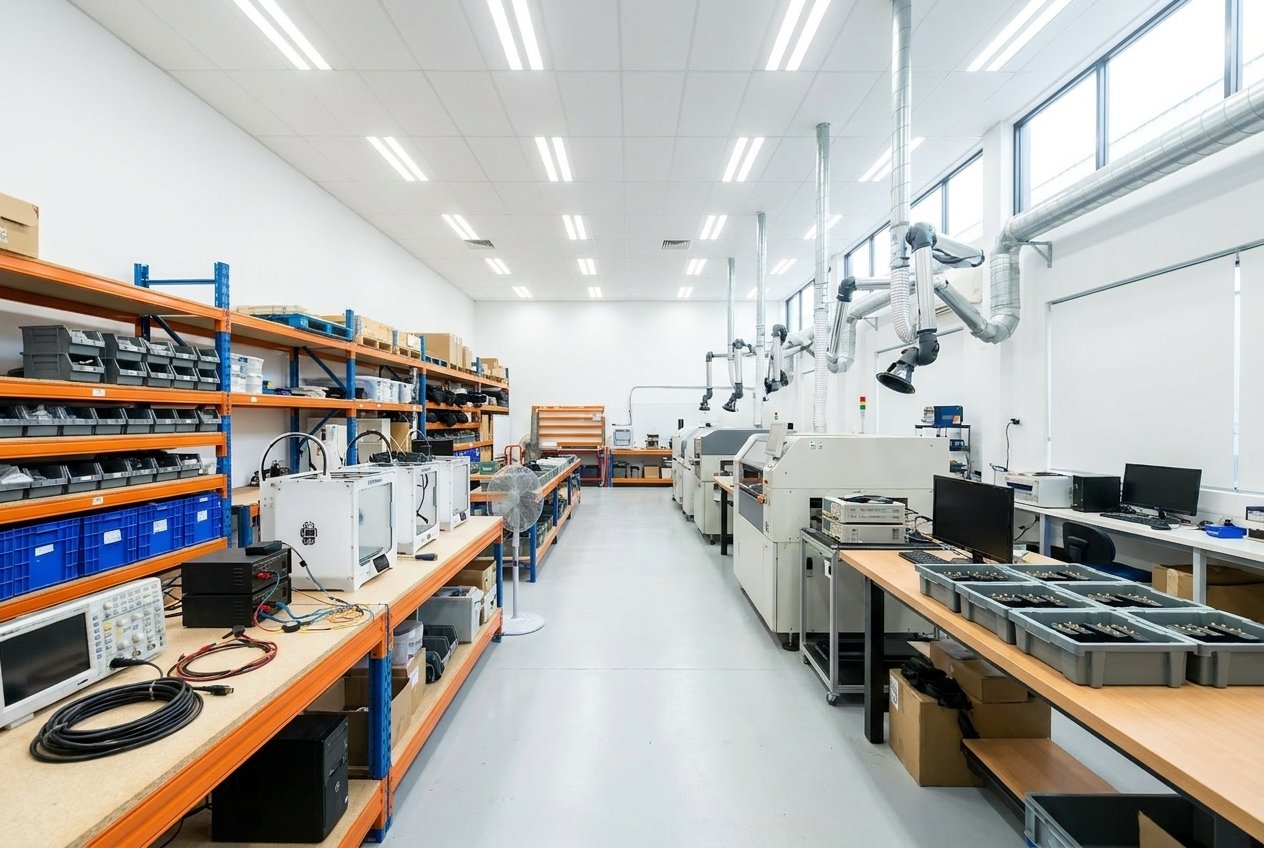
Sensium is among the last Australian-owned-and-built fleet telematics providers in Australasia. The hardware is designed and manufactured in Australia, the firmware is written in-house, fleet data is hosted in Australia, and the hardware is built to last the life of the vehicle.
30 minutes, configured to your fleet. We respond within one business day.
- Australian-Made certified hardware
- RCM-approved devices
- LGP · QFleet · NZ AoG panels
- ORIX NZ preferred partner

Credentials
Australian-Made certified, RCM-approved hardware. Listed on the LGP Fleet Management Services panel (AU), the QFleet Telematics Panel (QLD), and the New Zealand All-of-Government Telematics Panel, and ORIX New Zealand's preferred telematics partner. Twenty years building telematics, with fleet data hosted in Australia.
The differences that matter
Why fleets choose Sensium.
Built locally
The TRACKbox is designed and manufactured in Australia.
Hardware ownership is not a marketing claim. It's the reason we say yes.
Jeremy McLean
Founder, Sensium
Ownership
Australian-owned. Australian-Made certified.
Sensium is owned and headquartered in Australia, with operations in both Australia and New Zealand. Foreign-owned providers (Geotab in Canada, Teletrac Navman and Powerfleet in the US) cannot claim Australian-Made certification - it requires Australian manufacturing. Council procurement officers increasingly evaluate where hardware is made, and the certification answers that directly.
Local ownership
AU + NZ
Sensium is owned and headquartered in Australia, with offices in Australia and New Zealand. There is no overseas parent company setting priorities for local customers.
End-to-end build · TRACKbox 4
- Hardware design + manufacture in Australia
- Firmware written in-house
- Custom features built in-house
- 4G LTE + Direct-to-Cell satellite ready
- True Path 1-second telemetry
- 10+ year typical deployment
Hardware + firmware
We design the TRACKbox. We write the firmware.
When a customer asked for a 115 km/h speed buzzer, we shipped it in four days. We own the hardware and firmware end-to-end, so council-specific or industry-specific requirements are built by the same team that designed the device.
Data sovereignty
Your fleet data stays in-region.
All customer data is hosted on Australian servers - Australian-owned, under Australian jurisdiction, never offshore. Encrypted in transit and at rest. Role-based access control. Audit logs for procurement and security review.
Where your data lives
Australian customers
Australian servers
New Zealand customers
Australian servers, trans-Tasman
- Encrypted in transit
- Encrypted at rest
- Role-based access
- Audit logs
The numbers behind the platform
Twenty years of telematics across Australia and New Zealand.
Thousands of vehicles across Australia and New Zealand, on True Path one-second telemetry. Hardware built locally. Data kept in-region. The same backbone running enterprise, council, and rural fleets right now.
3
government procurement panels - LGP, QFleet, and the NZ All-of-Government Telematics Panel
10+
year typical hardware deployment - some devices still in service after seventeen
1 second
True Path telemetry intervals - most providers poll every two minutes
Australian-made hardware, firmware written in-house, data hosted in Australia.
Frequently asked
Common questions when comparing Sensium.
The questions that most often arrive during procurement scoring. For the full set of council-specific questions, see Local Government & Councils.
Question 01
What makes Sensium different from Geotab, Teletrac Navman, or Powerfleet?
Question 01
What makes Sensium different from Geotab, Teletrac Navman, or Powerfleet?
Three differences. First, ownership: Sensium is Australian-owned, and its TRACKbox hardware is Australian-Made certified. Geotab is Canadian. Teletrac Navman is US-owned (Fortive). Powerfleet (MiX and Fleet Complete) is US. Second, hardware and firmware: Sensium designs and manufactures the TRACKbox in Australia and writes the firmware in-house, so custom requests are handled in-house. Third, data sovereignty: all customer data is hosted on Australian servers, under Australian ownership and jurisdiction.
Question 02
Is Sensium Australian-owned?
Question 02
Is Sensium Australian-owned?
Yes. Sensium is Australian-owned, and its TRACKbox hardware is Australian-Made certified. Founded in New Zealand in 2005, headquartered in Brisbane since 2011, with offices in both countries. We sit on the Local Government Procurement Fleet Management Services panel for the AU council sector.
Question 03
Where is Sensium fleet data stored?
Question 03
Where is Sensium fleet data stored?
All customer data - Australian and New Zealand - is hosted on Australian servers. Encrypted in transit and at rest. Role-based access control. Audit logs for procurement and security review.
Question 04
How long do Sensium devices last?
Question 04
How long do Sensium devices last?
TRACKbox hardware is designed for ten-plus year deployments. Some Sensium devices are still in service after seventeen years. Total cost of ownership is materially better when the hardware lasts the life of the vehicle. Hardware and firmware are designed together to support long deployment lifetimes.
Question 05
What does Sensium build in-house?
Question 05
What does Sensium build in-house?
The TRACKbox GPS tracking hardware is designed and manufactured in Australia. The Sensium Connect+ fleet management software is developed in-house. The True Path one-second telemetry firmware is written in-house. This end-to-end ownership is the reason custom features are built in-house.
Question 06
Is Sensium on government procurement panels?
Question 06
Is Sensium on government procurement panels?
Yes — three of them. Sensium is on the Local Government Procurement (LGP) Fleet Management Services panel for Australian councils, the Queensland Government QFleet Telematics Panel for Queensland state agencies, and the New Zealand All-of-Government (AoG) Telematics Panel for NZ government agencies. Each appointment compresses the procurement timeline — engagement runs through the standard panel RFQ process rather than a fresh tender.
Question 07
Are Sensium devices certified for use in Australia and New Zealand?
Question 07
Are Sensium devices certified for use in Australia and New Zealand?
Yes. Sensium TRACKbox devices carry the RCM (Regulatory Compliance Mark) Tick of Approval — the mandatory certification for electronic equipment sold and operated in Australia and New Zealand. Without RCM compliance, businesses can face significant penalties. Some lower-cost imported telematics devices on the market do not hold valid RCM certification.
Question 08
What is True Path one-second telemetry, and why does it matter?
Question 08
What is True Path one-second telemetry, and why does it matter?
True Path is Sensium's one-second telemetry. Most fleet telematics polls vehicle position every two minutes; True Path samples every second, capturing the path a vehicle actually took rather than an approximation. The difference shows up in arrival accuracy, geofence precision, and route reconstruction .
Question 09
Why does owning the hardware and firmware let Sensium ship custom features faster?
Question 09
Why does owning the hardware and firmware let Sensium ship custom features faster?
Because the people who designed the device write its software. When a customer asked for a 115 km/h speed buzzer, Sensium shipped firmware to the in-field devices in four days. Designing the TRACKbox in Australia and writing the firmware in-house means custom requirements are built by the same team.
Question 10
Does Sensium offer satellite connectivity for fleets operating past cellular coverage?
Question 10
Does Sensium offer satellite connectivity for fleets operating past cellular coverage?
Yes. TRACKbox 4 combines 4G LTE with Direct-to-Cell satellite and is built to fail over automatically where the service is available. Direct-to-Cell is live in New Zealand and rolling out in Australia where supported by network availability and plan configuration, with Iridium satellite available for remote Australian coverage today - so fleets working past the cellular grid stay visible to dispatch.
Talk to Sensium
Talk to us about your fleet.
The differences above are easiest to evaluate against your current platform. We'll work from your fleet profile and walk you through the cost of ownership compared to where you are today.