
Products · Panic & duress
When seconds matter. From the vehicle, or 5 km away.
A state-of-the-art panic and duress solution for your vehicles, plus a remote LoRa duress pendant for lone workers operating away from the vehicle. Sensium prioritises the well-being and security of both individuals and organisations.
30 minutes, scoped to duress coverage on your fleet.
Two devices, one alert channel
Both the in-vehicle panic button and the LoRa remote pendant trigger the same alert chain — SMS, email, push notification, platform alert — to the people you configure. Drivers get protection inside the vehicle; lone workers get protection up to 5 km outside it.
Two complementary devices
In the vehicle. Or away from it.
Most fleet duress incidents happen in one of two scenarios: your driver is in the vehicle (and needs to summon help immediately without leaving the cabin), or your driver is away from the vehicle on foot (and needs to summon help with the vehicle as the anchor point). Sensium covers both.
Lone-worker safety
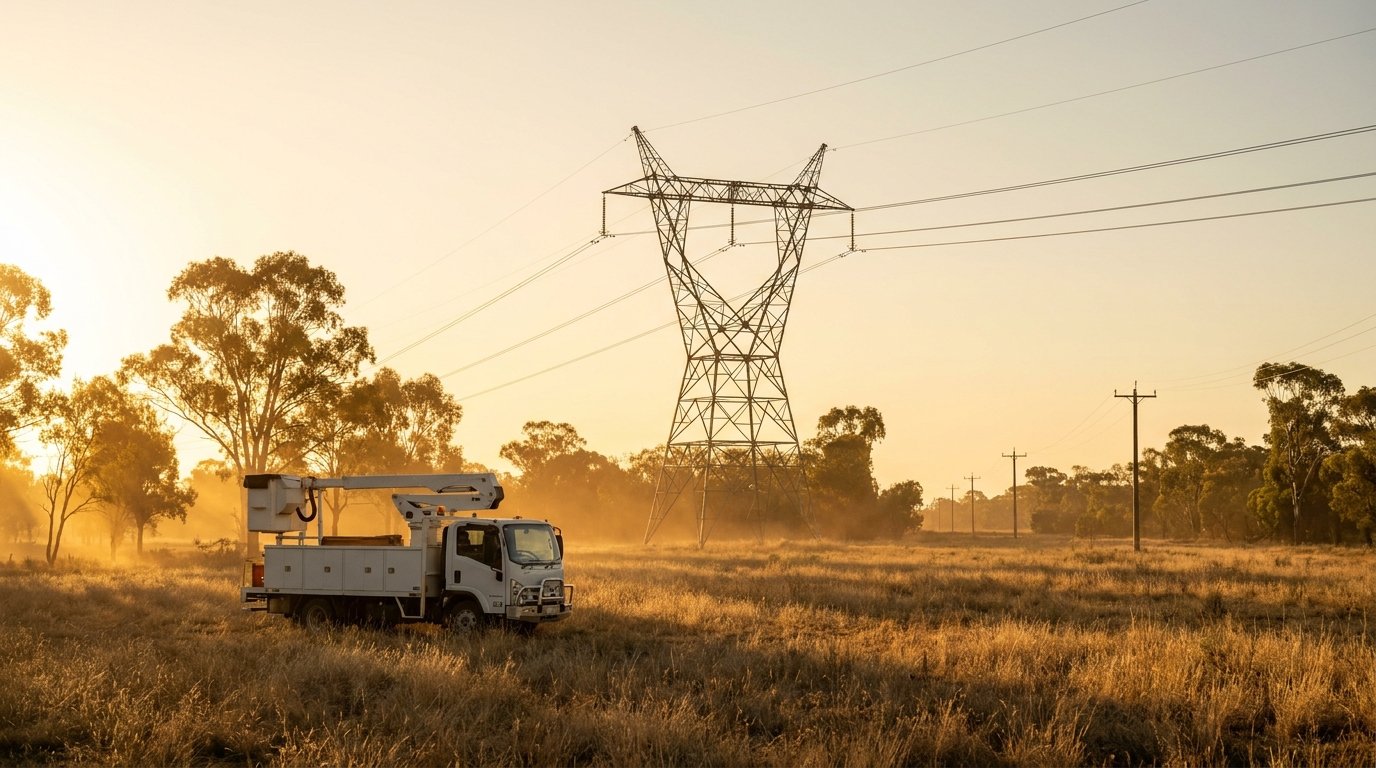
The duress signal reaches the vehicle from up to five kilometres away.
In-vehicle panic button
Within easy driver reach.
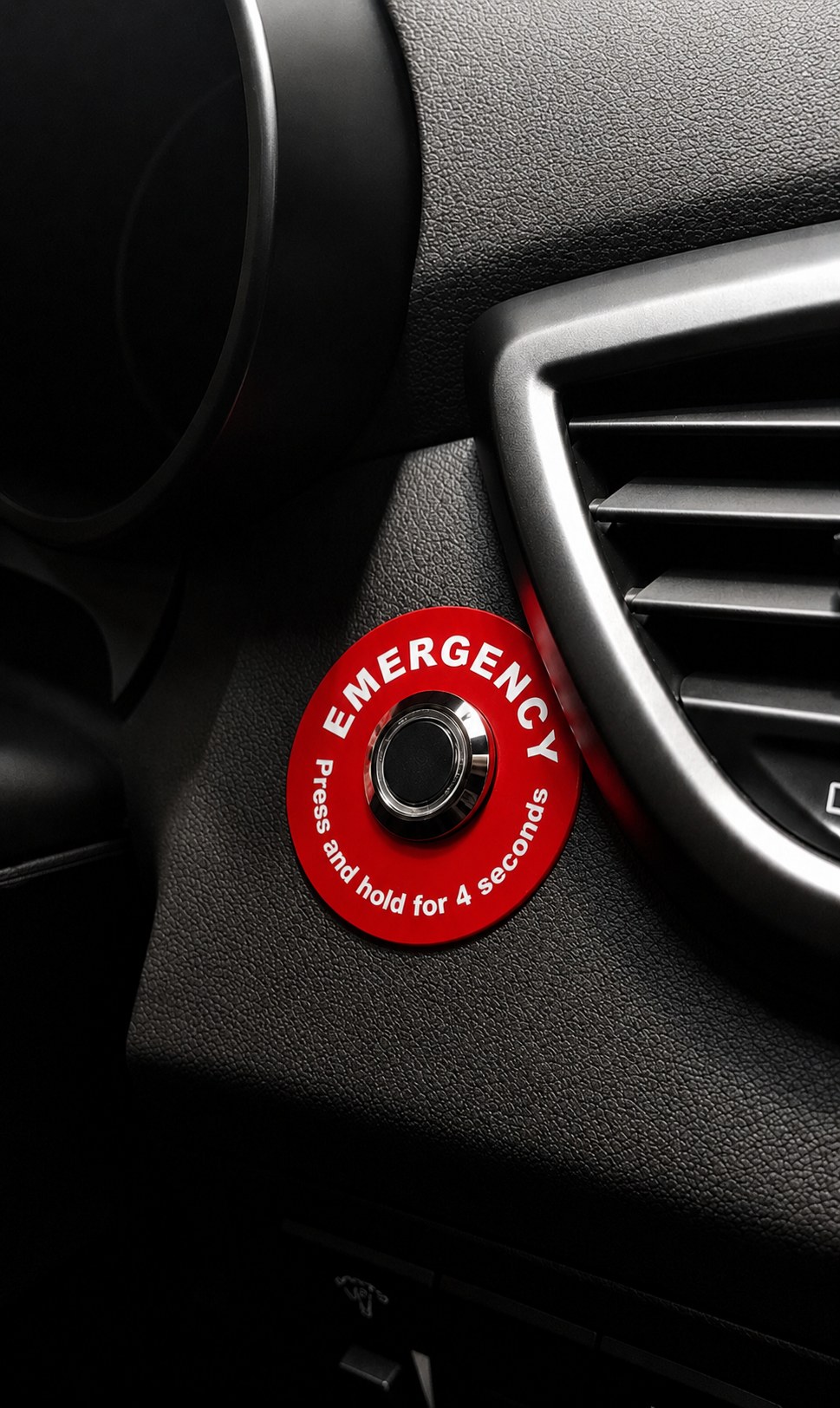
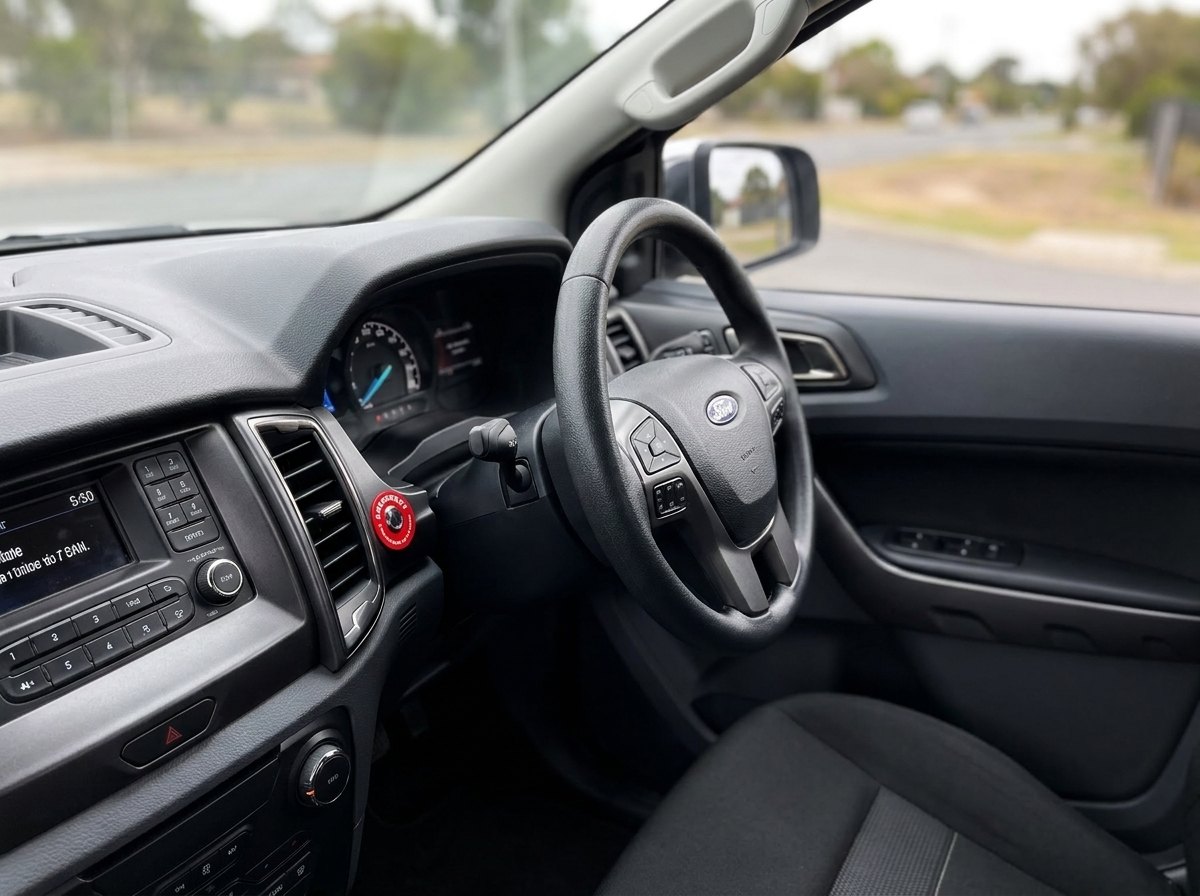
A dedicated hardware-wired emergency button installed on the vehicle's dashboard or trim, within easy driver reach. Two activation modes available: standard panic (alert fires on press) and latched panic (alert continues until manually reset). Designed for durability and frictionless activation in high-stress situations.
Activation modes
- Standard panic — alert on press
- Latched panic — continues until reset
- Press-and-hold safety (4 seconds)
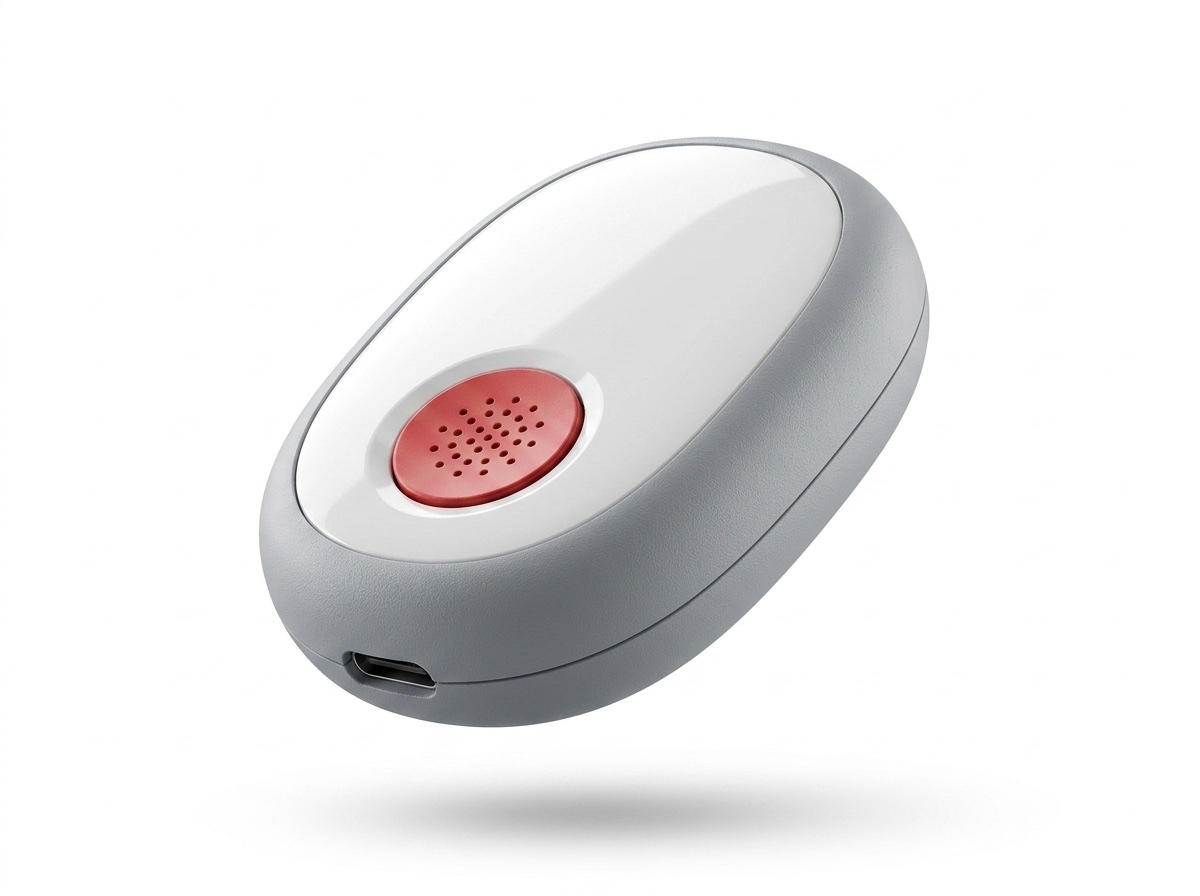
LoRa specifications
- Up to 5 km line-of-sight range (conditions dependent)
- Low-power, long-runtime design
- Relays through TRACKbox — no separate SIM
- USB-C charging
LoRa remote duress pendant
Up to 5 km line of sight.
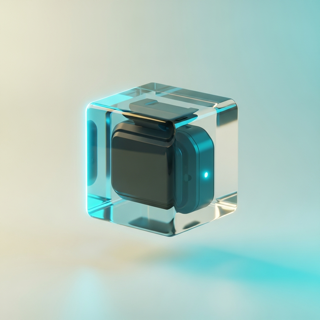
A palm-sized personal duress device for lone workers operating away from the vehicle. Carried on a lanyard or clipped to a belt. Talks to the TRACKbox in the vehicle via LoRa (Long Range) wireless - purpose-designed for long-distance, low-power signalling with strong signal penetration. The pendant triggers the same alert chain as the in-vehicle button.
The alert chain
SMS. Email. Push. Platform.
On activation, both devices trigger the same multi-channel alert chain to the people you've configured. SMS for immediate attention. Email for record and escalation. Push notification for the Sensium Connect mobile app. Platform alert visible to the operations centre. The fleet manager doesn't need to be at the desk for the alert to land.
Configurable alert routing
You decide who gets which alert, on which channel, with what escalation. Daytime might route to the operations desk; after-hours might route to a duty manager's phone. Critical activations can fire to multiple people simultaneously.
Cover your in-vehicle and off-vehicle scenarios - 30 minutes.
Frequently asked
Panic & duress questions.
Question 01
What is the difference between the panic button and the LoRa pendant?
Question 01
What is the difference between the panic button and the LoRa pendant?
The in-vehicle panic button is mounted in the vehicle within easy driver reach — for emergencies that happen while the driver is in the vehicle. The LoRa remote duress pendant is carried by the person (worn on a lanyard or clipped to a belt) and works up to 5 km line-of-sight from the vehicle's TRACKbox — for lone workers operating away from their vehicle.
Question 02
What happens when the panic button is pressed?
Question 02
What happens when the panic button is pressed?
Activation immediately sends alerts via SMS, email, push notification, and platform alerts to the people you've configured. Two activation modes available: standard panic (alert fires on press) and latched panic (alert continues until manually reset). The activation also triggers any associated dispatch workflows you've set up.
Question 03
How far does the LoRa pendant work from the vehicle?
Question 03
How far does the LoRa pendant work from the vehicle?
Up to 5 km in clear line-of-sight conditions. LoRa (Long Range) is a low-power wide-area networking technology designed specifically for long-distance, low-bandwidth signalling — perfect for personal duress where you need range and reliability over data rate. Robust signal penetration even in challenging environments.
Question 04
Does the pendant need its own SIM?
Question 04
Does the pendant need its own SIM?
No. The LoRa pendant talks to the TRACKbox in the vehicle, which then relays through its own cellular (or satellite) connection. The pendant only needs to be charged — no separate connectivity contract, no per-pendant data plan.
Question 05
Can I install the panic button on existing vehicles?
Question 05
Can I install the panic button on existing vehicles?
Yes. The button installs in any vehicle with a TRACKbox TB2 or TB4. Standard install positions it on the dashboard or trim within easy driver reach. Professional installation recommended for clean wire routing and durability.
Question 06
What is the difference between standard and latched panic activation?
Question 06
What is the difference between standard and latched panic activation?
Standard panic fires the alert on press, for a single notification of an emergency. Latched panic continues the alert until it is manually reset, which suits situations where the threat is ongoing and you want the signal to persist until someone confirms the all-clear. Both modes use a press-and-hold safety of about four seconds to prevent accidental activation.
Question 07
Who receives the alert when the panic button is activated?
Question 07
Who receives the alert when the panic button is activated?
You configure who is notified, on which channel, with what escalation. Activation sends alerts via SMS, email, push notification, and platform alert to the people you have set up. Routing can differ by time of day — for example the operations desk during the day and a duty manager after hours.
Question 08
Can the LoRa pendant be used as the only safety device?
Question 08
Can the LoRa pendant be used as the only safety device?
The LoRa pendant is designed to work with the vehicle as its anchor point — it relays through the TRACKbox in the vehicle, which then sends the alert over the vehicle connection. It covers the lone-worker case up to 5 km line-of-sight from the vehicle. The in-vehicle panic button covers emergencies while the driver is in the cabin. Most operations deploy both to cover each scenario.
Question 09
Does the panic and duress solution need a separate monitoring contract?
Question 09
Does the panic and duress solution need a separate monitoring contract?
No separate monitoring contract is built into the product. Alerts are delivered straight to the people and channels you configure — SMS, email, push, and platform alert — so your own operations centre or duty staff receive them directly. You decide the escalation chain that suits your organisation.
Question 10
How is the duress alert sent when the vehicle is out of cellular coverage?
Question 10
How is the duress alert sent when the vehicle is out of cellular coverage?
The TRACKbox sends alerts over its 4G LTE connection on the Telstra network in Australia. On the satellite-capable TRACKbox 4, satellite connectivity provides an additional path where it is available — Iridium is available today in Australia, and Direct-to-Cell is live in New Zealand and rolling out in Australia subject to carrier availability. The device also uses store-and-forward so data is held and sent once a connection is re-established.
Talk to Sensium
Cover the in-vehicle and the off-vehicle case.
A 30-minute walkthrough on your specific operational risk profile. We'll scope what the panic button + LoRa pendant deployment looks like across your fleet, including the alert routing and escalation chain.